Understanding the Retail Landscape: The First Step in Network Planning
Before deciding where to open the next store, or enter a new city, the first step is understanding the retail landscape.
- How many stores can your brand support within a given city?
- Which cities is your network already strongest in?
- Which cities have the highest concentration of competitors?
Answering these questions helps businesses move beyond individual site decisions and take a broader view of how their existing and future networks are positioned across market, helping determine whether a city has the scale and demand to support their brand.
A New Way to View Networks in GapMaps Live
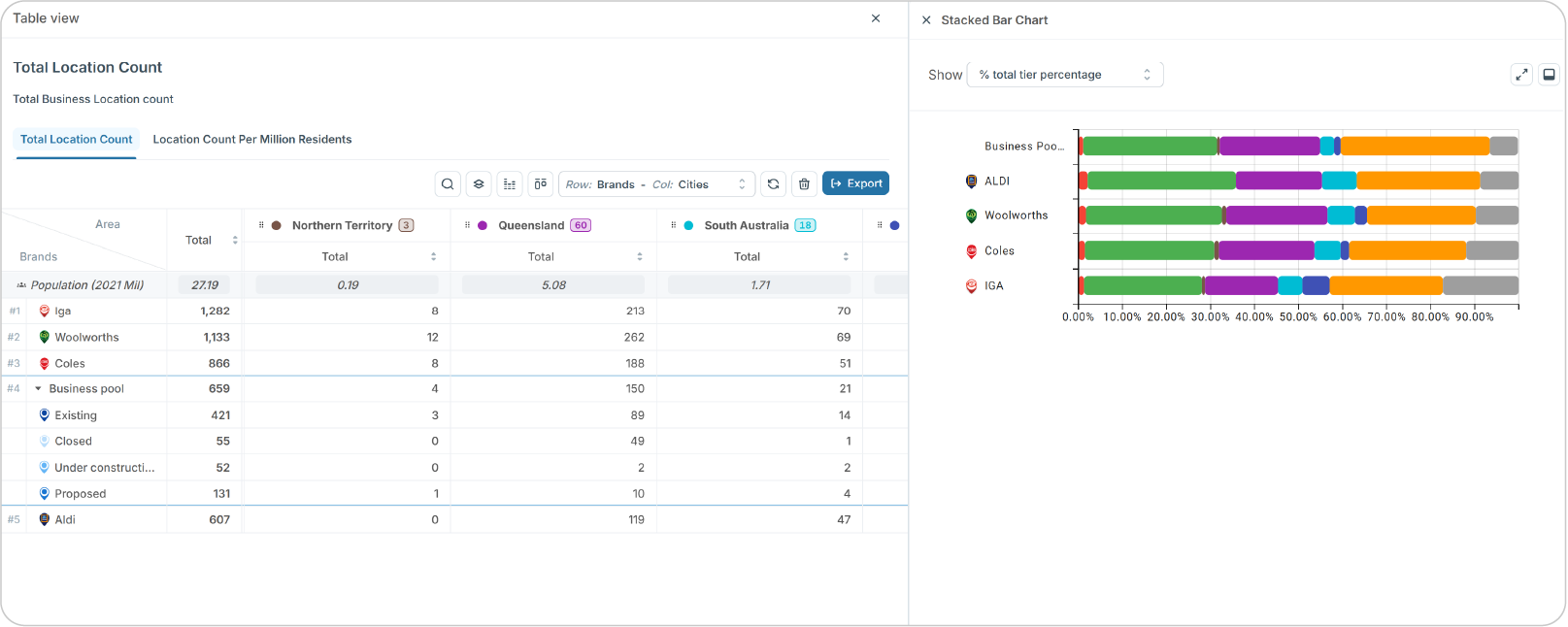
To support this step, GapMaps Live now includes Table View, providing another way to analyse store networks.
While the map is ideal for visualising locations geographically, Table View allows you to step back and compare how networks are distributed across different markets.
Using GapMaps globally consistent city definitions you can compare and contrast your brands coverage within and across different markets.
Understand Network Distribution Across Cities
A key part of understanding the retail landscape is analysing how many stores exist within each major city across a country.
Looking at store counts and provisions by city helps reveal how networks are distributed geographically and whether certain markets may be underserved or oversupplied.
These metrics provide a clearer picture of market penetration and underlying demand, providing a framework to optimize your development pipeline.
Building the Foundation for Network Growth
Understanding how existing and future store networks are distributed across cities, competitors, and retail destinations provides the context needed to plan network expansion.
By analysing the retail landscape first, businesses can better identify where opportunities exist, which markets have capacity for growth, and how their network compares within the broader competitive environment.